

Hazmat Transportation: Requirements, Regulations & Compliance Guide
Updated: July 22, 2026 at 11:57 AM
Hazmat transportation is the movement of hazardous materials by commercial vehicles, rail, air, or vessel under strict federal safety regulations. In the trucking industry, hazmat transportation includes everything from fuel and chemicals to compressed gases and medical waste.
With roughly 3 billion tons of hazardous materials shipped annually in the U.S., hazmat transportation is one of the most heavily regulated areas of commercial trucking. Motor carriers and drivers must comply with rules covering classification, packaging, shipping papers, placards, training, permits, and emergency response procedures.
Whether you’re an owner-operator hauling fuel or a carrier moving chemicals, understanding hazmat transportation requirements is essential for maintaining compliance and avoiding costly violations.
Key Takeaways
- Hazardous materials transportation in the U.S. is regulated primarily by the US Department of Transportation (DOT) under 49 CFR Parts 171–180, with the Pipeline and Hazardous Materials Safety Administration (PHMSA) providing oversight of hazardous materials movement nationwide.
- Motor carriers and drivers hauling hazmat by truck must follow rules covering classification, packaging, documentation, placarding, and emergency response at every stage of transit.
- Hazmat employee training is mandatory and must be repeated at least every three years. Required training includes general awareness, function-specific training, safety training, and security awareness training.
What Is Hazmat?
“Hazardous materials” (hazmat) refers to any substance capable of posing an unreasonable risk to health, safety, or property when transported in commerce. The Hazardous Materials Transportation Act, enacted in 1975, established the legal framework now implemented through the hazardous materials regulations in 49 CFR Parts 171–180. Hazardous materials transportation is heavily regulated to protect public safety and the environment.
Hazmat covers a wide range: explosives, flammable liquids and gases, corrosives, toxic and infectious substances, radioactive materials, and other dangerous goods. In trucking, everyday examples include fuel tankers carrying gasoline, chemical totes, pesticide pallets, compressed gas cylinders, and medical oxygen. Hazmat includes hazardous substances and marine pollutants as defined under federal law. These rules apply to shippers, carriers, and any hazmat employee involved in preparing or moving hazardous material.
What Is Considered a Hazardous Material?
A material is considered hazardous for transport if it appears in the DOT Hazardous Materials Table (49 CFR 172.101) or meets hazard class definitions in Part 173. Common trucking examples include gasoline and diesel, anhydrous ammonia, industrial acids and caustics, paint and solvents, pesticides, lithium batteries, medical waste, and compressed gases.
Some hazardous materials fall into special categories. These include hazardous substances, hazardous waste, marine pollutants, elevated-temperature materials, and inhalation hazards. Shippers often use Safety Data Sheets (SDS) to determine whether a product is regulated. The SDS can help identify the proper shipping name, UN/NA number, and hazard class. Even small amounts of a flammable liquid may be regulated. If you’re unsure, review the Hazardous Materials Table or seek guidance before transporting the material.
Hazmat Transportation Requirements
Hazmat transportation requirements cover every step: classification, packaging, marking, labeling, documentation, loading, securement, and emergency response. Transporting hazardous materials involves unique safety risks. Drivers must account for traffic conditions, weather, road hazards, and other factors that could affect the shipment. Some hazardous materials must be separated during transport to prevent dangerous chemical reactions. Loading errors are a common cause of hazmat incidents.
Core obligations for motor carriers and drivers include:
- Obtaining a USDOT number and FMCSA registration
- Carrying a hazmat safety permit (HMSP) when required
- Permits are necessary for transporting hazardous materials on restricted routes
- Conducting pre-trip and post-trip inspections for motor vehicles and containers, checking packaging, valves, closures, and placards
Pre-trip and post-trip inspections help identify damaged equipment, leaking containers, missing placards, and other issues before a shipment enters transit. Shippers must properly classify and document hazardous materials before transport. Carriers and drivers must verify that shipping papers are accurate, packages are labeled, and placards match the load. Carriers should regularly review their safety programs and hazmat procedures to ensure compliance with hazardous materials regulations and DOT requirements.
The 9 Hazard Classes Explained
DOT divides hazardous materials into 9 hazard classes, some with divisions, based on the primary risk. Adhering to strict packaging protocols is critical for safe hazardous material transport, and class determines packaging, placarding, and sometimes routing rules.
- Class 1: Explosives, including Blasting agents, fireworks, and detonating cord.
- Class 2: Gases, including Propane (Div. 2.1), nitrogen (Div. 2.2), chlorine (Div. 2.3).
- Class 3: Flammable Liquids, including Gasoline, diesel, ethanol, and solvents.
- Class 4: Flammable Solids, including Sulfur, magnesium, and water-reactive metals.
- Class 5: Oxidizers and Organic Peroxides, including Bleaching agents, certain fertilizers.
- Class 6: Toxic and Infectious Materials, including Pesticides, medical waste, pathogens.
- Class 7: Radioactive Materials, including Medical isotopes, industrial sources.
- Class 8: Corrosives, including Sulfuric acid, battery acid, strong alkalis.
- Class 9: Miscellaneous Hazardous Materials, including Lithium batteries, environmentally hazardous substances, and airbag inflators.
Some materials have more than one hazard. For example, a product may be both flammable and toxic. Drivers should understand all hazards associated with a load so they can address hazards appropriately and respond effectively during an emergency.
Hazmat Shipping Requirements
Most requirements for shipping hazardous materials apply directly to shippers. However, carriers and drivers are still responsible for verifying that shipments are prepared correctly before transport. Every hazardous materials shipment must include accurate shipping papers. Key elements include:
- Selecting the correct proper shipping name and UN/NA identification number
- Using compliant packaging, containers for hazardous materials must meet specific performance standards.
- Meeting quantity limits (limited quantity, excepted quantity, bulk vs. non-bulk)
Shipping papers must include the basic description sequence (ID number, proper shipping name, hazard class, packing group), a shipper certification statement, and 24-hour emergency contact information. Drivers should verify that shipping papers are accurate before leaving the shipper. Required documents must remain accessible in the cab and be retained for the required period. Documentation errors are among the most common causes of hazmat violations, making careful review of shipping papers essential.
Hazmat Placards and Labeling Requirements
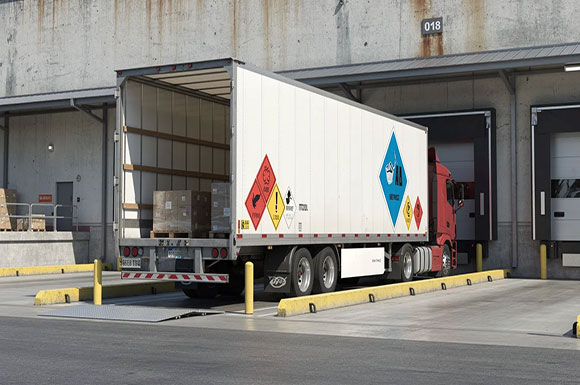
Labels are small diamond-shaped symbols affixed to individual packages indicating hazard class. Placards are larger signs placed on the transport vehicle. Vehicles carrying hazardous materials must display appropriate placards on all sides when the shipment meets or exceeds thresholds in 49 CFR Part 172 Subpart F.
Typical scenarios: a full gasoline tanker needs Class 3 placards on front, rear, and both sides; mixed-load trailers may need a “DANGEROUS” placard; radioactive materials require unique signage. Placards must match the hazard class of the shipment. They must remain visible, legible, and securely attached throughout transport. Placards should also be removed when they are no longer required. Chemical spills can lead to contamination and environmental damage, making correct hazard communication essential. Incorrect placarding is one of the most common hazmat violations found during inspections. Regular vehicle checks and driver training can help prevent these violations.
DOT Hazmat Regulations
The DOT regulates hazardous materials transportation under 49 CFR 171–177, with enforcement shared between PHMSA and FMCSA. Hazmat compliance can be challenging because carriers may need to follow federal, state, and local requirements at the same time.
- Part 171: General definitions and applicability
- Part 172: Hazard communication (placards, labels, shipping papers, marking)
- Part 173: Packaging requirements
- Parts 174–177: Modal-specific rules
- Part 180: Inspection and testing of containers and equipment
The FMCSA also enforces hazmat-specific rules in 49 CFR Part 397 covering routing, parking, and emergency response procedures for certain hazardous materials by highway. Carriers should regularly monitor regulatory updates from PHMSA and FMCSA.
The hazardous materials regulations are administered by the U.S. Department of Transportation through PHMSA. The Environmental Protection Agency (EPA) may also regulate certain hazardous substances and hazardous wastes, particularly when environmental protection, cleanup, or disposal requirements apply.
The PHMSA provides oversight of hazardous materials movement throughout the United States. The agency works alongside FMCSA to regulate the transportation of hazardous materials and promote public safety.
Who Needs a Hazmat Endorsement?
A hazmat (H) endorsement on a Commercial Driver’s License (CDL) is required for drivers who transport certain quantities of hazardous materials requiring placarding. Special training is legally required for transporting hazardous materials, and drivers must be properly trained before operating under an H endorsement.
Typical scenarios requiring the endorsement: operating a cargo tank with gasoline, hauling bulk corrosive liquids, or pulling trailers with placardable quantities of compressed gases. Drivers handling both tank and hazmat loads may need the combination “X” endorsement.
Steps to get a hazmat endorsement:
- Complete a TSA security threat assessment (fingerprinting and background check)
- Pass a written hazmat knowledge exam
- Meet state-level CDL requirements
Some exceptions apply for limited quantity or “materials of trade” shipments that don’t require placards.
When Is a Hazardous Materials Safety Permit Required?
FMCSA requires a Hazardous Materials Safety Permit (HMSP) under 49 CFR § 385.403 for carriers transporting specific high-risk materials, including certain explosives, inhalation hazard gases and liquids, highway route-controlled quantities of radioactive materials, and large bulk loads of toxic inhalation hazards.
Carriers needing an HMSP must maintain a satisfactory safety rating, carry adequate insurance and coverage, and submit to heightened oversight. Some hazardous materials are subject to special routing requirements. States and local jurisdictions may also require additional permits or route approvals, especially for radioactive materials and other high-risk loads. In some cases, permits are necessary for transporting hazardous materials on restricted routes. Carriers should review both federal and local routing requirements before moving high-risk shipments.
Hazmat Training Requirements
Hazmat employee training is mandatory under 49 CFR 172.704 (training requirements are outlined in 49 CFR 172 subpart H) for anyone who directly affects the safety of hazardous materials transportation. All employees involved in hazmat transport must receive mandatory training, and anyone preparing hazardous materials for transport must be trained. This includes drivers, dispatchers, loaders, and shipping clerks. All are classified as hazmat employees under federal law.
The four main training components:
- General awareness/familiarization
- Function-specific training
- Safety training, including training on emergency procedures essential for handling spills and incidents
- Security awareness (and in-depth security plan training when required)
Initial training must be completed within 90 days of starting hazmat-related duties and repeated at least every 3 years. Personnel need function-specific training to comply with federal guidelines, and training on emergency procedures is essential for anyone handling hazardous materials. Robust emergency response plans improve outcomes during incidents involving hazardous materials. Motor carriers must document each employee’s name, completion date, materials used, and trainer information. Emergency responders must also be trained under OSHA’s HAZWOPER standard. Proper recordkeeping is just as important as completing the training itself.
Hazmat Compliance Checklist for Carriers
Maintaining compliance in hazmat transportation requires ongoing attention to safety, documentation, training, and equipment. Before transporting hazardous materials, carriers should confirm that:
- Drivers have the required CDL endorsements and are properly trained.
- Hazmat employee training records are current.
- Shipping papers are accurate and include emergency response contact information.
- Packaging, labels, and placards meet regulatory requirements.
- Motor vehicles and containers have completed pre-trip and post-trip inspections.
- Federal permits and insurance requirements have been met.
- Emergency response procedures are documented and understood by personnel.
- Routing restrictions have been reviewed before transit.
- Company safety practices are being followed consistently.
A simple compliance checklist can help reduce risk, improve safety, and support the safe transportation of hazardous materials.
Penalties for Hazmat Violations
Violations of hazardous materials transportation rules can lead to substantial civil penalties, criminal liability, lost operating authority, and increased insurance costs. PHMSA-administered civil penalties can reach tens of thousands of dollars per violation, with higher amounts for willful violations or those causing injury, death, or environmental damage. The PHMSA actively enforces these standards.
Common violations motor carriers face:
- Incorrect or missing placards
- Incomplete shipping papers
- Untrained hazmat employees
- Leaking packages or improper securement
- Failure to register when required
Violations found during roadside inspections or compliance reviews affect a carrier’s CSA scores and safety rating, which in turn impact freight opportunities, insurance premiums, and your ability to do business as a responsible carrier. Regular internal audits can help identify compliance issues before they result in violations.
Frequently Asked Questions
No. Placards are only required when a shipment meets specific quantity and hazard thresholds under federal regulations. Some limited-quantity shipments are exempt. Carriers should review 49 CFR 172.504 and verify placarding requirements before transporting hazardous materials.
A hazmat employee is anyone whose job affects the safe transportation of hazardous materials. This can include drivers, loaders, warehouse employees, dispatchers, and anyone involved in preparing shipping documents.
Carriers that transport hazardous materials may have additional registration, insurance, training, and permitting requirements beyond their USDOT and MC numbers. These requirements vary based on the type and quantity of material being transported.
Yes. Some hazardous materials are subject to special routing and parking restrictions under federal and state regulations. Carriers should review applicable route requirements before transporting high-risk hazmat loads.
A Hazardous Materials Safety Permit (HMSP) is required for carriers transporting certain high-risk materials, including specific explosives, toxic inhalation hazards, and highway route-controlled radioactive materials. Eligibility requirements are established by FMCSA.
Hazmat transportation regulations are designed to protect public health, safety, property, and the environment. These rules help reduce risk during the transportation of hazardous materials by establishing requirements for packaging, shipping papers, training, placards, and emergency response procedures.
Related Articles:
- Hazardous Materials Safety Permit (HMSP) Guide
- TSA Grants Renewal Exemption for Truckers With HAZMAT Endorsement
- What is a Driver Qualification File and Do I Need One?

He is the Lead Content Specialist at FCCR, where he develops educational content focused on trucking compliance, DOT regulations, and FMCSA registration requirements. He works closely with compliance processes and industry systems to provide clear, accurate guidance for owner-operators and carriers.