

What Is An ECM on a Vehicle and How Can It Help Your Case?
Read time: 5 minutes
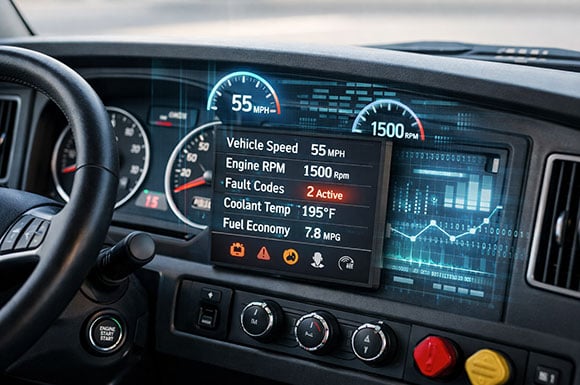
The ECM, or engine control module, is a key computer system found in modern vehicles, including semi-trucks. If you are wondering what is an ECM on a vehicle, it helps to think of it as the system that controls engine performance, fuel injection, and ignition timing while also recording important data.
In trucking, the ECM is often referred to as the ECM on a truck or the vehicle’s black box. It collects data from various sensors and stores information about the engine’s operation, speed, braking, and more. This data can play a crucial role after an accident, especially when determining what happened and who may be responsible.
What Is an Engine Control Module (ECM) on a Vehicle?
An engine control module ECM is the main computer system that manages how the engine runs. It is part of the engine management system and works with different vehicle systems to ensure optimal performance.
The ECM continuously monitors engine parameters using key sensors such as the throttle position sensor, oxygen sensor, and coolant temperature sensor. It then makes real-time adjustments to optimize engine performance.
These adjustments include:
- Fuel injection timing
- Ignition timing and spark plug firing
- Air-fuel mixture
- Engine cylinders and combustion timing
This process helps the engine run smoothly, improve fuel efficiency, and reduce harmful emissions.
At the same time, the ECM collects data and stores diagnostic codes that can be reviewed later.
What Is an ECM on a Truck?
In a semi-truck, the ECM plays an even more critical role. It functions as both a control system and a data recorder that tracks various aspects of the truck’s operation.
For drivers and owner-operators, this means the ECM is not just another electronic control unit. It is a system that can provide detailed insight into how the truck was being driven before an incident.
Because it continuously monitors vehicle systems, the ECM can help reconstruct events after a crash or mechanical failure.
What Does ECM Data Record in a Truck?
The ECM records detailed information about engine performance and driving behavior.
This includes:
- Vehicle speed
- Sudden braking or deceleration
- Throttle input and fuel consumption
- Engine load and fuel injected data
- Idle time and engine operation
- Diagnostic codes and trouble codes
This data is often downloaded after an accident to create a timeline of events.
Signs of a Faulty ECM
A faulty or malfunctioning ECM can lead to serious performance issues and increased costs.
Common signs of a bad ECM include:
- Poor fuel efficiency or poor fuel economy
- Engine stalling or rough idling
- Engine misfires or erratic engine behavior
- Check engine light or warning lights staying on
- Poor engine performance or reduced power
- Hard starting or vehicle failing to start
If these issues are ignored, they can lead to larger mechanical problems and downtime.
How Fault Codes in ECM Data Can Impact a Case
One of the most important diagnostic functions of the ECM is storing fault codes.
These diagnostic codes are triggered when the system detects problems in vehicle components, such as:
- Brake system issues
- Cooling system problems
- Sensor failures
- Emissions control faults
These trouble codes are time-stamped and stored in the ECM.
If a fault code shows a problem existed before an accident, it may indicate the truck was operating with a known issue. This can become important in legal situations or insurance claims.
How ECM Data Is Used After a Truck Accident
After a crash, ECM data is often reviewed by investigators and insurance companies.
It may be used to:
- Confirm speed before impact
- Determine braking activity
- Identify engine behavior leading up to the crash
- Review diagnostic codes and system warnings
- Compare recorded data with reported events
Because the ECM collects data automatically, it provides an objective view of the truck’s operation.
Why ECM Data Matters for Fuel Efficiency and Performance
Beyond accidents, ECM data plays a crucial role in daily operations.
It helps:
- Optimize engine performance
- Improve fuel economy and fuel efficiency
- Detect issues early
- Ensure optimal engine performance
- Support accurate recordkeeping
When the engine management system is working correctly, it helps maintain consistent performance and reduces unnecessary wear on vehicle components.
ECM vs PCM vs ELD: What’s the Difference?
The ECM is often confused with other control modules, including the powertrain control module and ELD systems.
Here is the difference:
- The engine control unit, or ECM, controls engine functions
- The powertrain control module manages both the engine and the transmission
- The ELD tracks hours of service for compliance
Each system plays a different role in vehicle technologies, but all contribute to safe and efficient operation.
You can review official ELD requirements through the FMCSA website.
How ECM Data Can Help or Hurt Your Case
If you are involved in an accident, ECM data can directly impact the outcome.
It can help by:
- Showing safe driving behavior
- Supporting your version of events
- Confirming proper engine operation
However, it can also work against you if the data shows poor performance, unsafe driving, or unresolved mechanical issues.
Understanding how the ECM works gives you better control over how your truck’s data may be used.
ECM Replacement Cost and Why It Matters
If the ECM fails, replacement can be expensive.
Typical ECM replacement cost can range from:
- $500 to $1,500 for standard vehicles
- $1,000 to $3,000 or more for commercial trucks
In addition to the cost, downtime can impact your business and reduce revenue.
When Should You Pay Attention to ECM Data?
You should take ECM data seriously if:
- You have been involved in an accident
- You notice warning lights or poor performance
- You are going through an inspection or audit
- You want to improve fuel consumption and efficiency
Being proactive helps prevent larger problems and keeps your truck operating at optimal performance.
Stay Compliant and Avoid Costly Issues
If you want to make sure your compliance records are accurate and your business is protected, FCCR can help handle the process for you. Our team works with drivers and owner-operators to make sure filings and documentation are completed correctly and without delays.
Speak with a live compliance specialist, call (208) 888-3227, or email services@fccr.co to get started.
Related Articles:
- FMCSA Revokes Three ELDs, Sets 2026 Replacement Deadline
- DOT Reinstatement Guide: Reactivate Your USDOT & MC Authority
- FMCSA Expands Crackdown on Chameleon Carriers and CDL Fraud

He is the Lead Content Specialist at FCCR, where he develops educational content focused on trucking compliance, DOT regulations, and FMCSA registration requirements. He works closely with compliance processes and industry systems to provide clear, accurate guidance for owner-operators and carriers.